Stacked stone fireplace: choosing and installing ledger panels
Updated
A fireplace is where most people first see stacked stone, and it is the wall ledger panels suit best: one surface, seen from across the room, with a frame already built into it. Here is how to plan one so that it looks built rather than applied.
Mantel height or full height
There are two common layouts. Stone to the mantel only, with paint or plaster above, keeps a traditional room calm. Stone from the floor or hearth to the ceiling turns the whole chimney breast into a feature, and is the usual choice in modern rooms and wherever the ceiling is high.
Full height uses more stone but needs fewer cuts: the panels run uninterrupted from bottom to top, and the only edges to finish are the sides of the chimney breast.
Which panel size
The 6 × 24 inch panel is the standard for fireplaces: it covers ground quickly and its long courses read well from across a room. The 6 × 12 suits small surrounds, where a 24 inch panel would be cut down at almost every course anyway, and the 6 × 18 sits between the two for narrow chimney breasts and columns.
Which colour
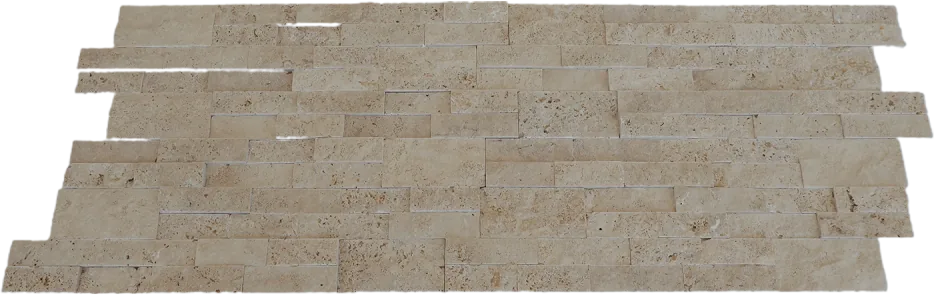
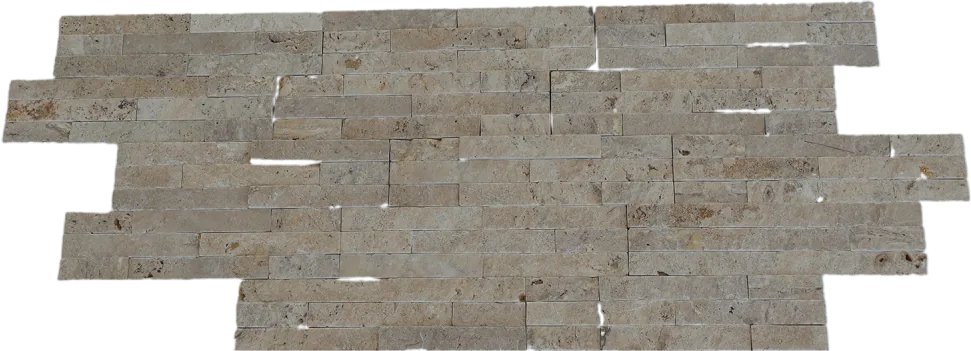
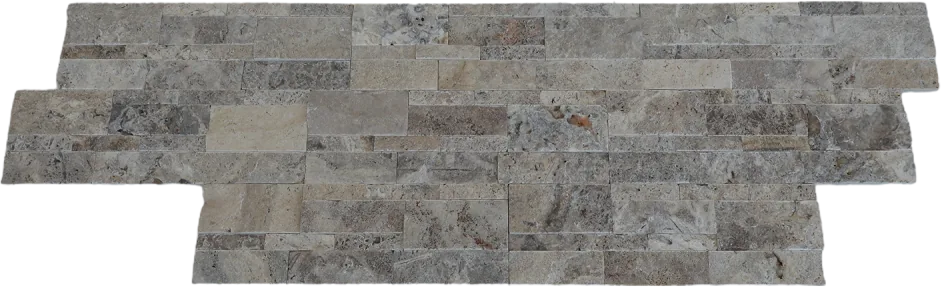
Warm travertines such as Gold, Rustic and Scabas make a fireplace the warmest thing in the room and suit wood, leather and traditional interiors. Classic Light and Diana Royal give a calm, pale wall that works with almost anything. Rain Grey and Tundra Grey suit contemporary rooms, black steel inserts and televisions mounted above.
Look at a sample in the room's own light, beside the hearth material and the floor. Stone that looks warm in a showroom can look grey under daylight from a north window.
How many panels
Measure the area to be covered, take away the firebox opening, and add 10 percent for cutting. A chimney breast 6 feet wide and 9 feet high is 54 sq ft; less a firebox opening of 3 by 2.5 feet, that is 46.5 sq ft, and with 10 percent added, 51 sq ft. In 6 × 24 panels, that is 51 panels, since each covers one square foot.
If the chimney breast stands proud of the wall, measure its two short sides as well, and count the outside corners separately.
What to fix it to
Natural stone is heavy, so it goes onto cement backer board, masonry or concrete with a polymer-modified thin-set mortar, never straight onto drywall. Check with your supplier what the panels weigh per square foot, and make sure the wall and its framing can carry it.
Start at the bottom, keep the first course level, and stagger the vertical joints from course to course. Back-butter each panel as well as combing the wall, so that every panel is fully bedded.
Heat and clearances
Stone is non-combustible, which is why it is used around fireplaces, but the wall behind it, the adhesive and anything combustible near the opening still have to meet the fireplace manufacturer's clearances and the local building code. Use a thin-set rated for the temperatures it will see, and follow the insert or stove manufacturer's instructions for the area around the firebox.
Sealing and soot
Travertine is porous, and a wood-burning fireplace will mark it with soot over time. Seal the stone with a penetrating sealer after installation, and again as the sealer maker advises. Sealed stone can be cleaned with water and a soft brush; avoid acid cleaners on travertine and marble.
Gas fireplaces mark stone far less, but sealing still makes the wall easier to keep clean.